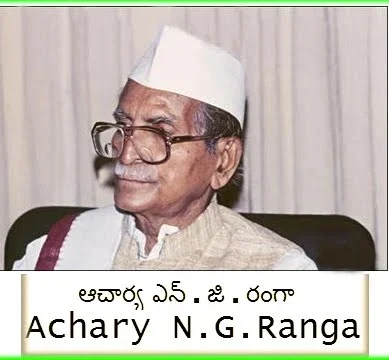
Acharya N. G. Ranga was a pioneer of the Indian peasant and cooperative movement, a renowned parliamentarian, and a freedom fighter who championed the socio-economic empowerment of small farmers, agricultural laborers, and rural artisans.
- November 7, 1900 – June 9, 1995
- Graduated from Andhra Christian College, Guntur
- B.Litt. in Economics from the University of Oxford (1926)
- Place of Origin: Born in Nidubrolu, Guntur district, Andhra Pradesh, into an agricultural family.
- Spouse: Bharti Devi Ranga.
- Founder of the Indian Peasant Institute (Nidubrolu)
- Founder and Leader of the All India Kisan Congress / Kisan Sabha
- President of the Federation of Rural Peoples' Organisations
- Pioneer of South Indian Handloom Weavers' and Agricultural Cooperatives
- Formulated credit and marketing cooperative models to protect marginal farmers, ryots, and weavers from rural moneylenders and speculative market practices.
- Spearheaded nationwide farmer cooperatives and adult education movements to build co-operative self-reliance across South India.
- Advocated for peasant-centric national policy frameworks integrating cooperative credit, crop insurance, and fair market pricing within India's economic structure.
- Economic Organisation of Indian Villages
- The Economics of Handloom
- Kisan Speaks
- Credo of World Peasantry
- Fight For Freedom
- Padma Vibhushan (1991)
- Institutional Legacy: Acharya N.G. Ranga Agricultural University (ANGRAU) in Andhra Pradesh was renamed in his memory.
- National Award: The Indian Council of Agricultural Research (ICAR) instituted the N.G. Ranga Farmer Award for diversified agriculture.