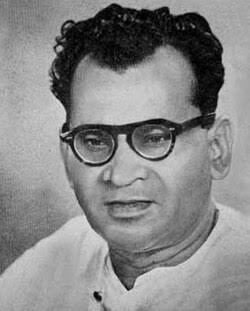
A pioneering social technocrat, author, and administrator, S. K. Dey was the architect of India’s post-independence Community Development Programme and served as the nation's first Union Cabinet Minister for Community Development, Cooperation, and Panchayati Raj under Prime Minister Jawaharlal Nehru. By designing the "Nilokheri Experiment"—a township built on refugee rehabilitation through worker co-ops—he established the structural model for grassroots Panchayati Raj institutions, rural extension networks, and cooperative credit societies across India.
September 13, 1906 – May 24, 1989
- Bachelor of Science in Electrical Engineering: Purdue University, USA (1931).
- Master of Science in Electrical Engineering: University of Michigan, Ann Arbor, USA (1933).
- Roots: Born in Sylhet (now in Bangladesh); relocated to West Bengal following Partition.
- Spouse: Padmavati Dey
- Union Ministry of Community Development, Cooperation & Panchayati Raj: First Cabinet Minister of India (1956–1966).
- Nilokheri Rural Development Township: Founder Architect, creating a self-sufficient cooperative refugee township in Haryana.
- National Cooperative Development Corporation (NCDC): Key Policy Architect, establishing the statutory body to plan and finance cooperative production, processing, and marketing nationwide.
- All India Panchayat Parishad: President, driving grassroots democratic decentralization.
- Institutionalization of NCDC & Cooperative Credit: Created the legal and financial frameworks for the NCDC (1963), enabling central capital assistance to flow directly to multi-state agricultural cooperatives, processing units, and cold chains.
- Synthesis of Cooperatives and Panchayati Raj: Engineered the national three-tier administrative policy that made the primary village cooperative society, the Gram Panchayat, and the local school the three foundational pillars of rural Indian democracy.
- Nilokheri (Asia Publishing House, 1962 – detailing the cooperative township model).
- Panchayati Raj: A Synthesis (1961).
- Power to the People? A Chronicle of India's 7-Decade Struggle with Decentralization.
- Padma Bhushan (1955): Awarded by the Government of India for distinguished public service in rural extension and community development.
- Global Recognition in Rural Extension: Honored by international agrarian and United Nations bodies for pioneering participatory rural development models in developing nations.