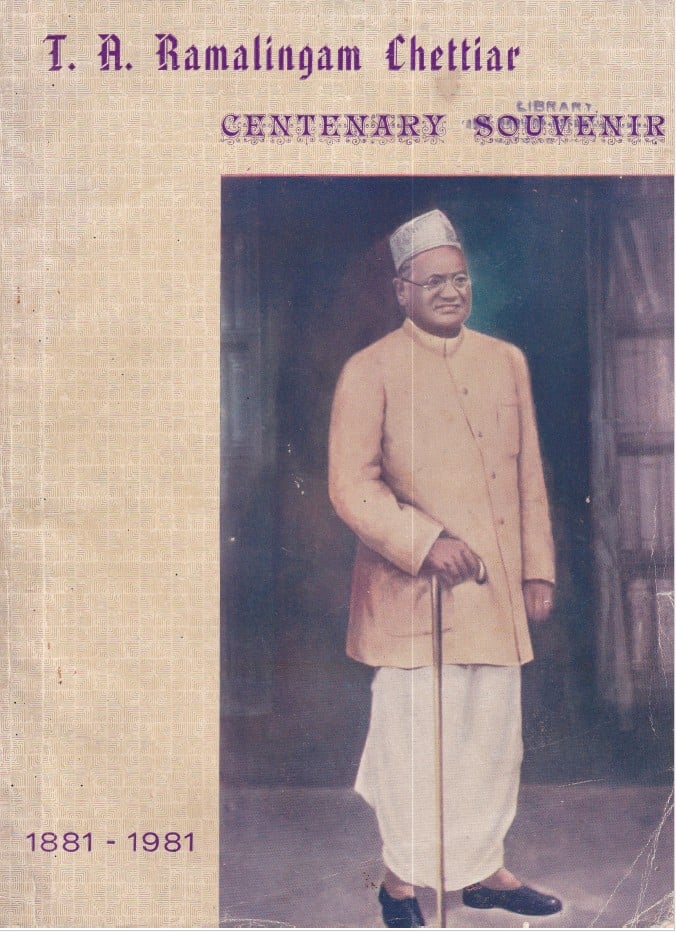
Revered as the "Father of the Cooperative Movement in Tamil Nadu," T. A. Ramalingam Chettiar was a visionary lawyer, legislator, and freedom fighter who spent four decades establishing rural banking, urban consumer cooperatives, handloom societies, and agricultural marketing structures across Southern India. His work established a template for non-political, democratic cooperative institutions that financed small farmers, stabilized urban food supply, and built self-help economic ecosystems long before independence.
May 18, 1881 – September 28, 1952
- Bachelor of Arts (B.A.): Presidency College, Madras.
- Bachelor of Laws (L.L.B.): Law College, Madras, qualifying as a leading advocate at the Madras High Court.
- Family Roots: Born into an affluent landed and trading family in Coimbatore, Tamil Nadu.
- Public Legacy: Dedicated his family wealth to public causes, educational institutions, and cooperative trust bodies across Tamil Nadu.
- Coimbatore District Central Cooperative Bank: Founder (1910) and long-time President, establishing the sole financing agency for local cooperatives.
- Coimbatore Stores and Bank (1905): Co-founder of one of the earliest urban consumer and credit cooperatives in South India.
- Madras Provincial Cooperative Bank & Land Mortgage Bank: Founder President, guiding apex cooperative banking policies across the Madras Presidency.
- Ramalingam Cooperative Institute, Coimbatore: Founder, creating the premier training center for cooperative officials and rural administrators.
- Legislative Roles: Member of the Madras Legislative Council (25 years), Member of the Central Assembly, Member of the Constituent Assembly of India, and Member of Parliament (1st Lok Sabha, 1952).
- Pioneering Urban & Rural Credit Ecosystems: Structured the three-tier cooperative credit mechanism in Southern India, ensuring that primary credit societies had direct access to district central banks and provincial apex funds.
- Industrial & Handloom Cooperatives: Extended cooperative principles into textile manufacturing, establishing handloom weavers' societies, printing presses, and worker-owned transport cooperatives to generate employment for ex-servicemen and rural artisans.
- Critical commentaries on classical Tamil literature (Kalithogai essays).
- Legislative whitepapers, policy speeches, and instructional guides on cooperative law, agricultural credit, and irrigation management in Southern India.
- Title of Diwan Bahadur: Conferred by the British Raj for public service (which he voluntarily renounced after the Indian Constitution took effect).
- Memorial Commemorations: Honored with a bronze statue opposite Coimbatore Railway Station and the naming of the Ramalingam Cooperative Institute.