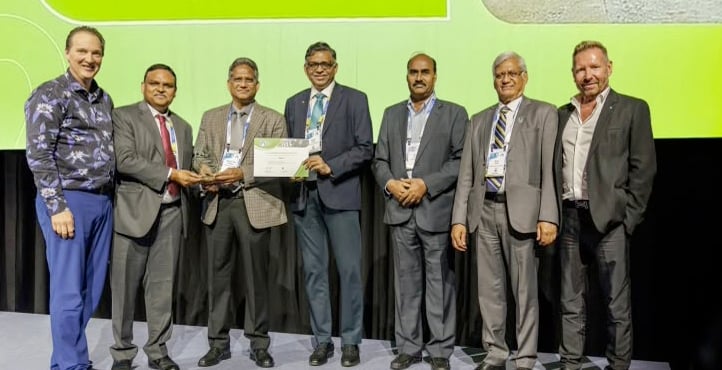
The National Dairy Development Board (NDDB) has earned international recognition for India’s cooperative dairy movement, winning the prestigious International Dairy Federation (IDF) Dairy Innovation Award 2026 for its initiative to empower women through dairy cooperatives in Manipur.
The award was presented in the category of Innovation in Socioeconomic Sustainability in Farming at the IDF World Dairy Summit 2026 in Auckland, New Zealand. The winning initiative, titled “Manipur Dairy in India: Building Bridges Through Women-Centric Cooperatives for Sustainable Livelihood Development”, was selected from 182 submissions representing 23 countries.
Dr Meenesh Shah, Chairman of NDDB and National Secretary of the Indian National Committee (INC) of IDF, received the award in the presence of Naresh Pal Gangwar, Secretary, Department of Animal Husbandry and Dairying, Government of India, and President of INC-IDF.
Jayen Mehta, Managing Director of Gujarat Cooperative Milk Marketing Federation (GCMMF), which markets Amul products; Shirsat Kapil, Managing Director of COMFED (Sudha); and representatives of the Indian Dairy Association also attended the occasion.
The award recognises Manipur’s efforts to strengthen rural livelihoods through women-led dairy cooperatives. The initiative promotes economic inclusion, creates sustainable income opportunities and brings diverse communities together through collective enterprise.
It also demonstrates how organised dairying can provide women with better access to markets and institutional support, particularly in regions where such opportunities have traditionally been limited.
Under NDDB’s professional management, Manipur Dairy is undergoing a process of revival and institutional strengthening. The initiative focuses on building stronger cooperative institutions, improving livestock productivity, introducing innovative milk procurement technologies and expanding organised marketing networks.
These interventions aim to improve market access for dairy farmers, strengthen the state's dairy infrastructure and create additional livelihood opportunities for rural households. Expanding organised milk production and procurement can also help Manipur reduce its dependence on milk supplies from outside the state.
The achievement aligns with the objectives of White Revolution 2.0, which seeks to expand the reach of dairy cooperatives, strengthen grassroots institutions and increase women's participation in organised milk production and procurement.
The Manipur initiative highlights the importance of combining professional management, technology and community participation to revitalise dairy institutions in underserved regions.
Beyond the international award, the initiative offers an example of how cooperative enterprises can overcome geographical and social barriers. The participation and determination of Manipur’s women dairy farmers demonstrate the potential of collective action to improve household incomes, strengthen rural economies and foster greater community participation.
For NDDB, the recognition marks an important milestone in its efforts to extend India's cooperative dairy model to new regions and position dairying as a driver of inclusive and sustainable rural development.